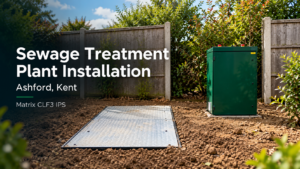
Avoiding Legal and Environmental Pitfalls in Rural Property Purchases
Buying a rural property or smallholding can be life-changing—but it also carries legal risks and environmental pitfalls that urban buyers rarely face. From off-mains drainage and watercourse protections to contamination, flooding and complex property rights, the margin for error is small. This guide explains the rules that matter—especially the General Binding Rules on septic tanks that tightened from 1 January 2020—the role of the Environment Agency, how the right surveys verify regulatory compliance, and why Boxall Ward is the trusted advisor to keep your purchase on track.
Why rural property due diligence is different
Off-mains drainage: the biggest hidden cost
Many rural properties aren’t connected to the public sewer. Instead, they rely on septic tanks, cesspools, or domestic sewage treatment plants (STPs). These systems sit at the intersection of environmental regulations and building standards, and their condition directly affects your legal risk, running costs, and the value of the property. If the system is non-compliant, you’ll need a plan—and a budget—to put it right. Learn more about our sewage treatment plant services.
Access rights, easements and covenants
Titles in rural areas often carry rights of way, shared access tracks, water abstraction rights, drainage easements or restrictive covenants. These can dictate how and where you can repair or replace a drainage system (for example, where a soakaway or drainage field may be installed). Robust conveyancing checks, paired with technical surveys, help you avoid expensive boundary or access disputes.
Environmental risks beyond drainage
Historic agricultural or light-industrial use can leave behind buried fuel tanks, pesticide residues or made ground. Add flood risk, ground stability, and radon exposure, and you have a cluster of hazards that must be screened early through environmental searches and, where indicated, intrusive investigation. The UK Government guidance is a useful starting point for buyers unfamiliar with these obligations.
2020 rule change: no direct discharge from septic tanks
What changed on 1 January 2020?
The UK’s General Binding Rules (GBRs) for small domestic discharges were tightened from 1 January 2020. A crucial change is that septic tanks must not discharge directly to a watercourse (stream, river, ditch, lake or pond). Where a property still has a direct-to-watercourse septic outfall, the system must be upgraded or replaced—typically with a compliant sewage treatment plant (STP) that discharges to a watercourse, or with a septic tank/STP that discharges to a properly designed drainage field in the ground, subject to percolation testing and site suitability.
What this means for buyers and sellers
If the existing system is non-compliant, the parties must agree—before exchange—who will fund and complete the upgrade. Lenders increasingly insist on evidence that off-mains drainage meets the GBRs and manufacturer maintenance requirements. Without a clear plan and costed quotation, you risk delay, retention of mortgage funds, or renegotiation of price. Our homebuyer septic tank surveys give you the clarity you need.
The Environment Agency’s role—and how compliance is assessed
Who enforces what?
The Environment Agency regulates small domestic sewage discharges in England and publishes the GBRs that owners must follow. In sensitive locations—such as Source Protection Zones, near wetlands, or where ground conditions are unsuitable—additional permissions or alternative solutions may be required. Local planning authorities and Building Control can also become involved where installation works or change of system type are proposed.
Evidence of compliance: what good looks like
- Clear identification of the system type (septic tank, cesspool, STP) and all components (inlet, outlet, drainage field/soakaway, sampling chamber).
- Confirmation the discharge point is not a watercourse (if it is, an upgrade path is required).
- Percolation test data and design calculations for any drainage field, sized to current standards.
- Manufacturer documentation and maintenance records for STPs, plus evidence of regular servicing and desludging.
- Capacity assessment for occupancy and load, including any planned extensions or annexes.
How surveys verify regulatory compliance
Layered checks to de-risk your purchase
A robust due-diligence pack typically includes:
- Drainage survey (septic tank/STP): condition report, compliance check against GBRs, identification of discharge route, and upgrade recommendations with ballpark costs.
- Environmental search: desktop screening for flood, contamination and ground stability, triggering further investigation if needed.
- Title and rights review: confirming access for maintenance vehicles, easements for pipe runs, and any covenants restricting works.
- Planning and Building Control check: identifying any consents required for replacement systems, drainage fields or outfalls.
Typical red flags a survey uncovers
- Direct discharge from a septic tank to a ditch or stream (post-2020 non-compliance).
- Illegal or undersized soakaways (not a compliant drainage field) leading to surface breakout.
- Failed percolation tests, high groundwater, or clay soils preventing effective infiltration.
- Oversized occupancy relative to tank capacity, or lack of maintenance records for an STP.
Costs, timelines and contracts: practical steps to stay in control
Budgeting for upgrades
Indicative costs vary with site constraints, access, electrics and ground conditions. A like-for-like replacement septic tank to a properly designed drainage field, or an STP installation with outfall, can run from modest sums to significant investment on complex sites. A written quotation from a specialist—referenced in the purchase contract—protects buyer and lender alike. Explore our West Sussex septic tank services for more information.
Allocate responsibility before exchange
Agree whether the seller completes the upgrade prior to completion, or the buyer receives a price reduction or retention to undertake the works after completion. Ensure warranties and compliance certificates are assignable and retained with the property documents.