Septic Tank vs Sewage Treatment Plant: What Your Survey Reveals
Summary: If you’re buying a property with off-mains drainage, the system type matters. A specialist survey checks compliance, performance, and likely future costs
What’s the difference between a septic tank and a sewage treatment plant?
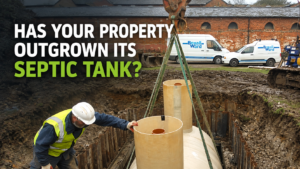
A septic tank is a passive system. Solids settle, fats float, and the remaining liquid (effluent) typically flows to a soakaway or drainage field. It usually has no electrics and relies on gravity and time.
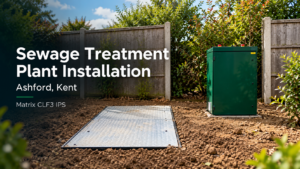
A sewage treatment plant actively treats wastewater using aeration and mechanical components. The effluent quality is generally much cleaner, but the system depends on power and routine servicing to work properly. If you’re unsure what you have, a homebuyer off-mains drainage survey will identify it.
Why it matters in a homebuyer drainage survey
Both systems can work well when installed correctly and maintained. The difference is the risks they carry and what must be checked before you buy. A specialist survey focuses on condition, suitability for the property, and whether the setup is legally compliant.
General home surveys rarely assess the drainage system properly beyond visible signs. Off-mains drainage needs a dedicated inspection.
What a survey should check (and what it should reveal)
If the property has a septic tank
- Tank condition, capacity, and evidence of structural wear or damage
- How the system discharges (to ground via soakaway/drainage field, or elsewhere)
- Signs of soakaway failure (waterlogging, odours, slow drainage, backing up)
- Access points, pipework condition, and inspection chamber performance
- Likely compliance issues and upgrade risk
If you’re buying a property with a septic tank, compliance is a big deal. Older setups are more likely to have an unsuitable discharge arrangement. Your survey should flag this clearly and explain what it means in practical terms.
If the property has a sewage treatment plant
- Mechanical and electrical operation (pumps, aeration, controls)
- Alarm systems (if fitted) and whether they function correctly
- Signs of neglect (noise, smells, poor outflow, sludge build-up)
- Discharge point location and condition
- Service history and likely maintenance requirements
Because treatment plants are more complex, a survey should identify any mechanical risk early. A unit that looks fine can still be expensive if it hasn’t been serviced properly.
Common problems that surveys uncover
Septic tank issues
- Non-compliant discharge arrangements
- Failing or saturated soakaways/drainage fields
- Root intrusion or collapsed pipe runs
- Lack of emptying records and poor maintenance
Sewage treatment plant issues
- Faulty pumps, blowers, or control components
- Systems that have been “running” but not treating effectively
- Outflow problems linked to servicing gaps
- Electrical issues or poor installation standards
Which is better: septic tank or sewage treatment plant?
It depends on the property, ground conditions, and how the system is installed and maintained. As a rule of thumb:
- Septic tanks can be simpler and cheaper to run, but soakaway performance and compliance risk are key.
- Sewage treatment plants can be more future-proof for some discharge situations, but they need power and regular servicing.
The real question isn’t “which is better?” It’s “is the system I’m buying safe, compliant, and fit for purpose?” That’s exactly what a specialist survey is for.
Compliance and environmental risk
Off-mains drainage isn’t just a maintenance issue — it can become a legal and environmental problem if a system is discharging incorrectly or failing. Your survey should explain any compliance concerns in plain English and outline the likely next steps.
For background on the rules that apply to small sewage discharges, see the UK government guidance here:
General binding rules for small sewage discharges.
Next steps if you’re buying a property with off-mains drainage
If you’re unsure what system is installed, or you want a clear view of condition and compliance before you commit, book a specialist inspection. Boxall Ward provides clear reporting and practical recommendations, including likely costs and upgrade options where relevant.
To arrange a survey, visit our homebuyer septic tank surveys page or contact us directly.
FAQs
- How can I tell if a property has a septic tank or a sewage treatment plant?
- Often you can’t tell reliably from a quick look. A specialist drainage survey can identify the system type, discharge arrangement, and any compliance risks.
- What usually costs more to fix: septic tanks or sewage treatment plants?
- Both can be expensive depending on what’s wrong. Septic tank issues often involve soakaway replacement or upgrades. Treatment plant issues can involve mechanical repairs or replacement if servicing has been neglected.
- Does a normal home survey cover off-mains drainage?
- Usually not in enough detail. Most building surveys don’t fully assess tanks, soakaways, discharge points, or compliance. A dedicated off-mains drainage survey is recommended.
- What’s the biggest risk when buying a property with off-mains drainage?
- Hidden non-compliance and hidden failure. A system can appear “fine” but still be illegal, poorly installed, or close to failing underground.