Septic Tank Design
The first Septic Tank was invented way back in the 1860s and continues to be utilised today. It is usually installed where access to the mains drainage is not feasible, and comes at a minimum of 2700 L or 650 gallons for a standard 2-bedroom house.
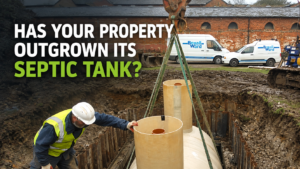
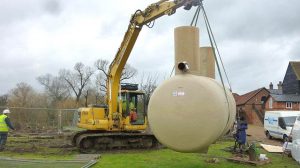
Basically, the base material is a huge concrete or stone, brick, polyethylene or fibreglass tank that’s buried in the ground in close proximity to the property it serves. Designed to take all waste water from your home, the primary purpose of a septic tank is to treat it and then drain from the outlet pipe into a soakaway.
Septic Tank Systems
There are two basic types of septic tank but either way, the functionality of how septic tanks work remain the same. Both systems feature a settlement tank that will retain sewage sludge for a sufficient amount of time for organic matter to undergo anaerobic decomposition, where the final effluent is drained into the soakaway system.
Traditional
Masonry built pits with a rectangular shape which may have one or two settlement chambers, where the second has a porous, slotted walls to act as the soakaway. Some can have 3 chambers separated by dividing walls with pipes to allow seamless flow within the system.
Onion
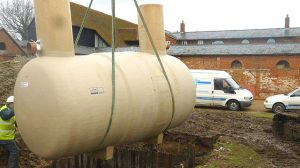
A modern type of septic tank made from glass-fibre (GRP) units or plastic in bottle-shaped form, where the flow is upwards instead of laterally. Given its durability and robust characteristic, this is the most popular septic tank in the UK to date.
Waste water enters the the septic tank’s first chamber, where the waste material and solids referred to as sludge is allowed to settle in the tank and scum to float. Is is then anaerobically digested by the natural bacteria breeding within it, thereby reducing the volume of solids in the tank.
The liquid flows through the dividing wall straight into the second chamber, where it may be lifted onto another system for further treatment. Further settlement occurs as it drains into the soakaway and the pre-treated sewage water is slowly released in to the soil.
Septic Tank Maintenance
The sludge which were not decomposed sensibly accumulates at the bottom of the septic tank over time. This build-up formed must be removed regularly to eliminate the possibility of clogging, and rapidly filling it up which causes undesirable overflows. Hence, emptying or pumping should be done ideally every 12 months. It can be as little as 3-6 month intervals, or extended to not more than 2 years depending on the tank size and usage.
The discharge should exhibit a light grey colour, otherwise, dark solids in the liquid or recognisable sewage waste means a septic tank explicitly requires de-sludging. Maintenance is key towards proper functioning and prevention of future inconveniences.
Septic Tank Problems
A septic tank that fails to execute proper performance does not only cause a nuisance but an added expense. Prevention is better than cure, so do not overload and overestimate its capacity.
Avoid putting strong or hazardous chemicals down the drain, like paint, thinners, solvents, and pesticides. The same goes with excessive draining of cooking oils and grease, and disposal of non-biodegradable items discharged into the tank.
One way or the other, this can lead to common problems such as sluggish flushing of toilets, gurgling sounds and plumbing backups or flooding, depression areas over the tank or soakaway, bad odours inside or outside the tank which can be diffused in the entire house, and ultimate septic tank failure.

How Septic Tanks Work – Get In Touch
If you’d like to discuss your septic tank maintenance, installation or any problems you may be having, please give us a ring on 01903 815377 or use our contact details to get in touch. We’ll look forward to hearing from you!

Find out more about our Services here and about Land Drainage here.