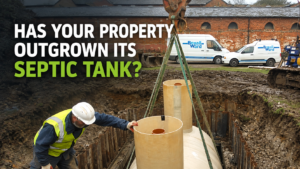
Has Your Property Outgrown Its Septic Tank? Signs Your System Is Too Small
Quick Answer
Yes. A property can effectively outgrow its septic tank or sewage treatment system. A system that was suitable when it was installed may no longer have enough capacity if the property has been extended, more people are using it or additional accommodation has been connected. Warning signs can include recurring drainage problems, unpleasant smells, wet ground around the drainage field and a system that seems to need attention more frequently than before.Can a Property Really Outgrow Its Septic Tank?
Yes. A septic tank, sewage treatment plant and its associated drainage system are designed to cope with a certain level of wastewater. If the amount of sewage entering the system increases substantially, the original installation may no longer be appropriate for the property it serves. This can happen gradually, which is why homeowners sometimes find themselves asking: “Why has our septic tank started causing problems when it used to work perfectly well?” The answer may not necessarily be that the tank itself has suddenly failed. The property and the demands being placed on the drainage system may simply have changed.What Can Cause a Septic Tank to Become Too Small?
Common changes include:- Extending a house and adding additional bedrooms
- Increasing the number of people living at the property
- Converting a garage, barn or outbuilding into accommodation
- Adding an annexe
- Connecting another property to an existing drainage system
- Changing how a property is used
- Using a property as holiday accommodation
- Increasing water use significantly over time
What Are the Signs That a Septic Tank May Be Too Small?
There is no single symptom that proves a septic tank is undersized. Many of the same symptoms can also be caused by a blockage, damaged pipework, poor maintenance or a failing drainage field. However, warning signs can include:- Toilets, sinks or showers draining more slowly than usual
- Recurring blockages or wastewater backing up
- Unpleasant sewage smells around the tank or drainage field
- Wet, boggy or unusually lush ground around the drainage field
- Wastewater appearing at ground level
- The system struggling during periods of heavy household use
- A noticeable increase in drainage problems after an extension or change of use
- A treatment plant repeatedly alarming or struggling to operate correctly
Does Adding Bedrooms Mean You Need a Bigger Septic Tank?
Not automatically. However, adding bedrooms can increase the potential occupancy of a property and therefore the amount of wastewater the drainage system may need to handle. This is why the capacity of an existing system should be considered when a property is substantially extended or altered. The important question is not simply how physically large the tank appears to be. It is whether the whole system is suitable for the maximum expected load from the property. That includes:- The septic tank or treatment plant
- Inlet and outlet drainage
- The drainage field
- Pumps, where fitted
- The method and location of discharge
Can the Drainage Field Be Too Small as Well?
Yes. This is an extremely important point. Installing a bigger septic tank will not solve the problem if the drainage field cannot safely disperse the increased volume of effluent. A septic tank separates solids from wastewater, but the liquid leaving the tank still needs further treatment through a suitable drainage field. You can read more about this in our guide to how a septic tank drainage field works. If a property has been enlarged or its wastewater load has increased, both the treatment system and the drainage field may need to be considered.Could the Problem Be the Drainage Field Rather Than the Tank?
Absolutely. A drainage field can deteriorate or become overloaded over time. Signs can include:- Standing water or boggy ground
- Sewage smells
- Poor drainage from the property
- Effluent appearing at the surface
- Recurring drainage problems despite the tank being emptied
Will Emptying the Septic Tank More Often Solve the Problem?
Not if the system is genuinely undersized. Regular desludging is an important part of maintaining a septic tank or sewage treatment plant, but emptying does not increase the treatment capacity of the system. If a tank repeatedly appears to struggle despite being properly maintained, there may be another issue that needs investigation. That could include:- An undersized treatment system
- A failing drainage field
- Damaged or blocked pipework
- A faulty pump
- Groundwater entering the system
- A change in how the property is being used
Does an Undersized Septic Tank Affect General Binding Rules Compliance?
It can. The Environment Agency’s General Binding Rules require treatment equipment to have enough capacity to deal with the maximum amount of sewage it will need to treat. They also require the system to be correctly installed, operated and maintained and not to cause pollution. If the amount of sewage entering a system increases, its capacity therefore needs to be reconsidered. For discharges to ground, the General Binding Rules normally apply only where the discharge is no more than 2 cubic metres per day. Different rules apply to discharges from sewage treatment plants to surface water. If a system cannot meet the applicable rules, further action or an environmental permit may be required. If you are unsure whether an existing installation is suitable, a septic tank compliance inspection can help establish what is present and identify potential problems.Do You Need to Replace the Septic Tank?
Not necessarily. The correct solution depends on what is actually causing the problem. Possible solutions might include:- Repairing damaged drainage or pipework
- Correcting a maintenance problem
- Repairing or replacing pumps or other equipment
- Installing or replacing a drainage field
- Replacing an undersized septic tank
- Upgrading to a sewage treatment plant
- Installing a larger treatment plant designed for the expected load
Would a Sewage Treatment Plant Be a Better Solution?
In some situations, yes. Modern sewage treatment plants provide a higher level of treatment than traditional septic tanks and are available in different sizes for domestic, multi-property and commercial applications. The correct unit needs to be selected according to the property, expected usage, discharge arrangements and site conditions. Boxall Ward supplies and installs a range of systems, including Matrix sewage treatment plants, with units available for a wide range of population requirements. A recent septic tank replacement in Wadhurst involved replacing the existing system with a Matrix sewage treatment plant and new drainage field.What Should You Do If You Think Your Septic Tank Is Too Small?
The first step is not necessarily to order a larger tank. It is to establish:- What type of system is currently installed
- What capacity it was designed for
- How the property is currently being used
- Whether the wastewater load has increased
- Where the system discharges
- Whether the drainage field is functioning correctly
- Whether there are defects elsewhere in the system
- Whether the installation appears to meet the relevant requirements
The Bottom Line
A septic tank or sewage treatment system that was suitable for a property years ago may not necessarily be suitable for it today. Extensions, additional accommodation, increased occupancy or connecting more properties can all increase the load placed on an off-mains drainage system. If problems have started after the property has changed, the system’s capacity is one of the things that should be investigated. However, similar symptoms can also be caused by drainage field failure, blocked pipework or equipment faults, so simply installing a larger tank without investigating the whole system may not solve the problem. Boxall Ward can inspect an existing off-mains drainage system, assess what is causing the problem and advise on practical options for repair, upgrading or replacement. Call 01903 815377 or contact Boxall Ward to discuss your septic tank, sewage treatment plant or off-mains drainage system.Frequently Asked Questions
Can a house outgrow its septic tank?
Yes. If a house is extended, additional accommodation is added or the amount of wastewater increases, the existing septic tank or treatment system may no longer have enough capacity for the property.
How do I know if my septic tank is too small?
Possible warning signs include recurring drainage problems, sewage smells, slow-draining toilets and sinks, wet ground around the drainage field or problems that become worse when the property is heavily used. These symptoms can have other causes, so the whole system should be inspected before assuming the tank is undersized.
Does adding bedrooms mean I need a bigger septic tank?
Not automatically, but additional bedrooms can increase the potential occupancy of the property. The capacity of the existing treatment system and drainage field should therefore be checked when a property is substantially extended or altered.
Will a bigger septic tank fix a failing drainage field?
No. A larger tank will not repair an overloaded, damaged or failing drainage field. The tank and drainage field form part of the same system and both need to be suitable for the amount of wastewater being produced.
Will emptying my septic tank more often solve the problem?
Regular emptying is important, but it does not increase the capacity of the system. If problems repeatedly return after the tank has been emptied, the tank, drainage field, pipework and other components should be investigated.
Can an undersized septic system breach the General Binding Rules?
The General Binding Rules require a treatment system to be large enough for the maximum amount of sewage it needs to handle and require the discharge not to cause pollution. If the wastewater load increases, the suitability and capacity of the system should be reassessed.
Can Boxall Ward check whether my septic tank is large enough?
Yes. Boxall Ward can assess an existing off-mains drainage system, investigate problems and advise whether repair, a new drainage field, increased treatment capacity or complete replacement is the appropriate solution.