
What Is a Soakaway, and Why Does It Matter in a Septic Tank Survey?
If you’re buying a rural property with a septic tank or sewage treatment plant, you’ll often see the word
“soakaway” in the report. It’s usually hidden underground — but it can be one of the most
important (and expensive) parts of an off-mains drainage system if something isn’t right.
Quick takeaway: A soakaway/drainage field is where treated wastewater disperses into the ground. If it’s failing, you can get smells, flooding, pollution risk, and potential compliance headaches.
What is a soakaway?
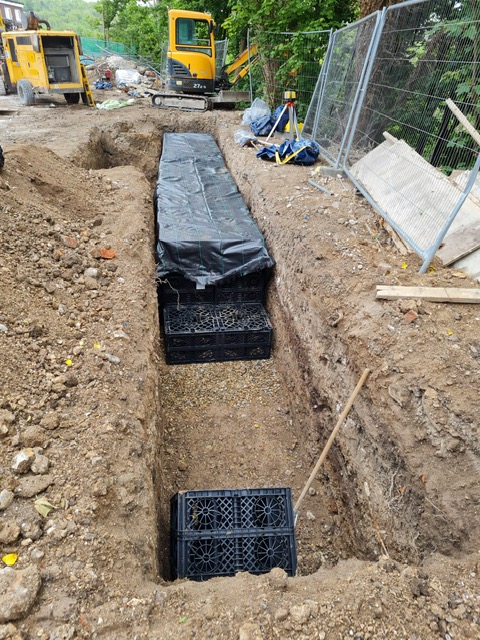
A soakaway is an underground area (often trenches with perforated pipework and stone) designed to let treated
wastewater disperse into surrounding soil. You won’t usually see it from the surface — which is exactly why
problems can go unnoticed until they become messy (and costly).
In off-mains drainage terms, people often use “soakaway” to describe what is more accurately a
drainage field / infiltration system for foul effluent.
How a soakaway works with septic tanks and sewage treatment plants
Septic tank (basic treatment)
In a septic tank, solids settle to the bottom and fats rise. The remaining liquid (effluent) flows out and needs
a safe place to disperse — typically into a drainage field. If the ground can’t absorb it properly, the system
can back up and surface.
If you want the broader basics, see our guide:
How septic tanks work.
Sewage treatment plant (higher treatment)
A sewage treatment plant treats effluent to a higher standard than a septic tank, but it still needs a compliant
discharge point — often a drainage field if there’s no suitable watercourse option.
Example of recent work:
Matrix CLF1 sewage treatment plant installation
.
Why a soakaway matters in a homebuyer septic tank survey
Because you can’t easily see a soakaway, it’s easy to assume it’s fine — until it isn’t. A failing soakaway can
lead to:
- Backed-up drains and slow drainage in the house
- Bad smells outside (especially after heavy use or wet weather)
- Waterlogged areas of garden
- Pollution risk to nearby ditches, streams, and land
- Potential enforcement / compliance issues if the discharge isn’t correct
This is why a proper pre-purchase inspection is so valuable:
Septic tank surveys (Homebuyer Surveys)
and
why a pre-purchase off-mains drainage survey can save you £££
.
What causes soakaways to fail?
The common reasons we see include:
- Age: many drainage fields have a lifespan (often decades), then begin to silt up or collapse.
- Poor soil permeability: clay-heavy ground struggles to absorb effluent consistently.
- Hydraulic overload: too many occupants, extra bathrooms, hot tubs, or changes in use over time.
- Maintenance issues: missed emptying can push solids into pipework and clog the field.
- Roots and damage: tree roots, vehicle loading, or landscaping that crushes pipe runs.
- Weather and ground conditions: persistent saturation can expose a “barely coping” field.
Related reading if you’ve already seen symptoms:
Septic tank flooding, odour and pollution problems.
Warning signs of a failing soakaway
Some problems are obvious. Others are subtle. Here’s what to look for:
- Standing water or “boggy” ground near the suspected drainage field area
- Persistent smells (especially in warm weather or after showers/laundry)
- Gurgling drains, slow flushing toilets, or intermittent backing up
- Greener-than-normal grass strips (nutrient-rich effluent near the surface)
- Issues that worsen after heavy rain
What a septic tank survey can check (and what it can’t)
A homebuyer off-mains drainage survey is designed to identify red flags early — before you complete on the
property.
What we typically look at
- System type (septic tank vs treatment plant) and visible condition
- Evidence of flooding, odour, poor flow, or surface breakout
- Likely discharge arrangement and whether it appears appropriate
- Practical risks: access, reinstatement, location constraints, upgrade feasibility
What may require further investigation
- Exact soakaway/drainage field layout (often unknown and undocumented)
- Percolation/soil testing (where a new field is being considered)
- CCTV surveys of pipe runs (where access points exist)
If you’re unsure whether you need a survey before buying, this is a good starting point:
5 signs you need a septic tank survey before buying
.
If a soakaway is failing: your next best options
If a soakaway/drainage field is suspected to be failing, the “right” fix depends on the site, soil, space,
and what’s legally and practically possible. Typical solutions include:
- Install a new drainage field (often subject to soil/percolation testing and correct sizing)
- Upgrade the treatment (e.g., replacing an old septic tank with a compliant solution)
- Re-route discharge where permitted and appropriate (site-specific and rule-dependent)
Example of compliant remedial work:
Drainage field installed by Boxall Ward Ltd
.
Compliance note (important for buyers)
In England, government guidance explains how small sewage discharges must meet the General Binding Rules, including
discharging to ground via a drainage field (and restrictions around discharging septic tank effluent to surface water).
It’s worth understanding this early because it can affect mortgage timelines, renegotiations, and upgrade costs.
Read the official guidance on the General Binding Rules (GOV.UK)
.
Want the simplest “buyer-safe” next step?
Book a septic tank homebuyer survey
and we’ll advise you on the most cost-effective route based on what’s on site.
FAQs
How long does a soakaway or drainage field last?
It varies by soil type, usage, installation quality, and maintenance. Many systems run for decades, but once they
start to clog or collapse, performance can drop quickly.
Can I tell where the soakaway is?
Sometimes you can spot hints (very green strips, soggy patches, inspection covers), but many are undocumented.
A survey can identify likely areas and risks, and recommend the right next test if needed.
Will a failing soakaway affect my house purchase?
It can. If there’s evidence of failure or non-compliance risk, buyers often renegotiate, request repairs, or seek
specialist quotes before exchange.
Final thoughts
A soakaway might feel like a small detail on a survey report — but it’s often the part that decides whether an
off-mains system is quietly fine… or quietly expensive.
If you’re buying a property with a septic tank or sewage treatment plant, a proper assessment of the discharge
arrangement can save you serious money and stress.
Next step:
Arrange a septic tank homebuyer survey with Boxall Ward.